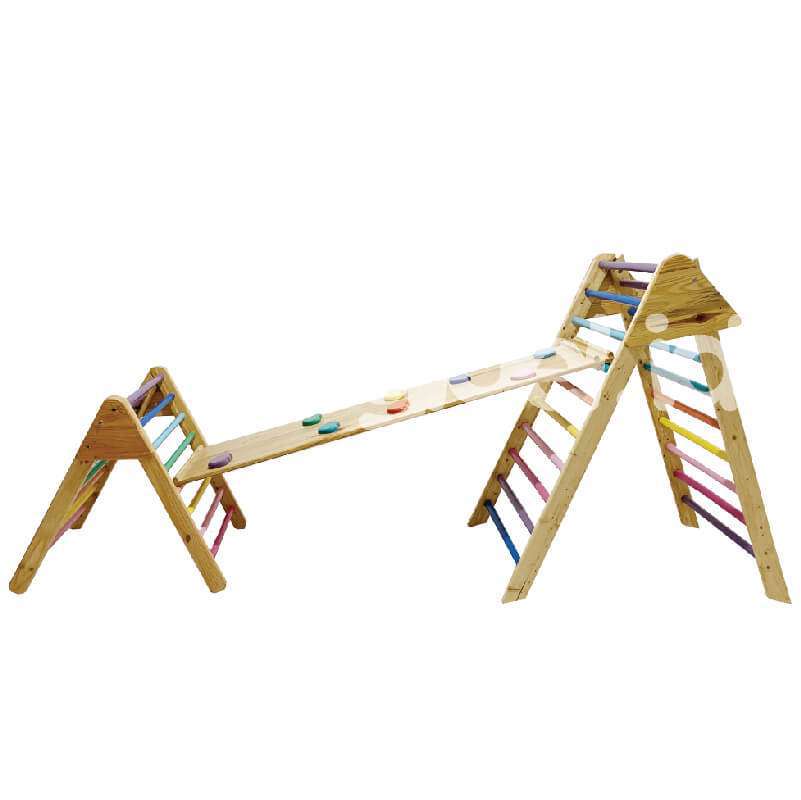
In the realm of childhood development and play, few tools have garnered as much attention and acclaim as the Pikler Triangle. Named after pediatrician Dr. Emmi Pikler, this innovative climbing frame has become a staple in early childhood education settings and family homes around the world, fostering physical activity, creativity, and exploration in young children.
A Brief History
The origins of the Pikler Triangle can be traced back to the work of Dr. Emmi Pikler, a Hungarian pediatrician renowned for her pioneering approach to infant care and development. In the mid-20th century, Dr. Pikler founded the Loczy Institute in Budapest, where she conducted groundbreaking research on child-rearing practices and the importance of respectful, autonomous care for infants and young children.
At the heart of Dr. Pikler’s philosophy was the belief in the innate competence of children to learn and develop at their own pace, guided by attentive and responsive caregivers. She emphasized the importance of providing infants and toddlers with a safe, nurturing environment that encouraged freedom of movement and self-directed play.
It was within this context that the Pikler Triangle emerged as a key tool for promoting gross motor skills, spatial awareness, and physical confidence in young children. Originally crafted from wood and characterized by its triangular shape and adjustable rungs, the Pikler Triangle quickly gained recognition for its ability to engage children in dynamic, open-ended play.
Design and Features
Central to the appeal of the Pikler Triangle is its simple yet versatile design. Consisting of a triangular frame with wooden rungs or steps of varying heights, the climbing structure provides children with a stimulating environment for exploration and physical activity.
The rungs of the Pikler Triangle are carefully spaced to accommodate children of different ages and abilities, allowing for gradual progression and skill development. Younger children may use the lower rungs for climbing, crawling, and pulling themselves up to a standing position, while older children can challenge themselves by ascending to greater heights and navigating the structure with increased agility and confidence.
Many Pikler Triangles also feature additional accessories such as ramps, slides, and climbing nets, further enhancing the play experience and encouraging imaginative exploration. With its natural materials and minimalist aesthetic, the Pikler Triangle blends seamlessly into both indoor and outdoor environments, inviting children to engage with their surroundings in meaningful and enriching ways.
Benefits of Play
The Pikler Triangle offers a wide range of developmental benefits for children, encompassing physical, cognitive, and socio-emotional domains. Through active, unstructured play on the climbing frame, children are able to strengthen their muscles, improve their balance and coordination, and develop spatial awareness and body control.
Moreover, the Pikler Triangle fosters a sense of autonomy and agency in children, empowering them to take risks, solve problems, and explore their capabilities in a safe and supportive environment. By allowing children to engage in self-directed play and follow their own interests and inclinations, the Pikler Triangle promotes independence, creativity, and a lifelong love of learning.
Educational Applications
In addition to its role in fostering physical development and creative expression, the Pikler Triangle has found a place in early childhood education settings as a valuable educational tool. Teachers and caregivers have embraced the climbing frame as a versatile platform for incorporating movement, sensory exploration, and imaginative play into the curriculum.
In a classroom or childcare setting, the Pikler Triangle can serve as a focal point for gross motor activities, group games, and cooperative play experiences. Children may use the climbing structure as a stage for imaginative role-playing, a platform for building obstacle courses, or a backdrop for storytelling and dramatic play.
Furthermore, the Pikler Triangle can be integrated into thematic units and interdisciplinary learning experiences, providing a tactile, kinesthetic dimension to lessons in science, math, language arts, and more. Whether it’s counting the rungs, experimenting with different climbing techniques, or exploring the concept of balance and equilibrium, children are able to engage with academic concepts in a hands-on, experiential manner.
Conclusion
In a world increasingly dominated by screens and structured activities, the Pikler Triangle offers a refreshing alternative that prioritizes hands-on exploration, physical engagement, and open-ended play. With its timeless design, developmental benefits, and endless possibilities for creativity and imagination, the Pikler Triangle has earned its place as a cherished resource for families, educators, and children alike.
As we look to the future of early childhood education and parenting, the Pikler Triangle serves as a reminder of the enduring value of simplicity, authenticity, and respect for the innate capacities of children to learn and grow. With each climb, each leap, and each moment of discovery, children are not only honing their physical skills but also building the foundation for a lifetime of curiosity, creativity, and joy in the world around them.

