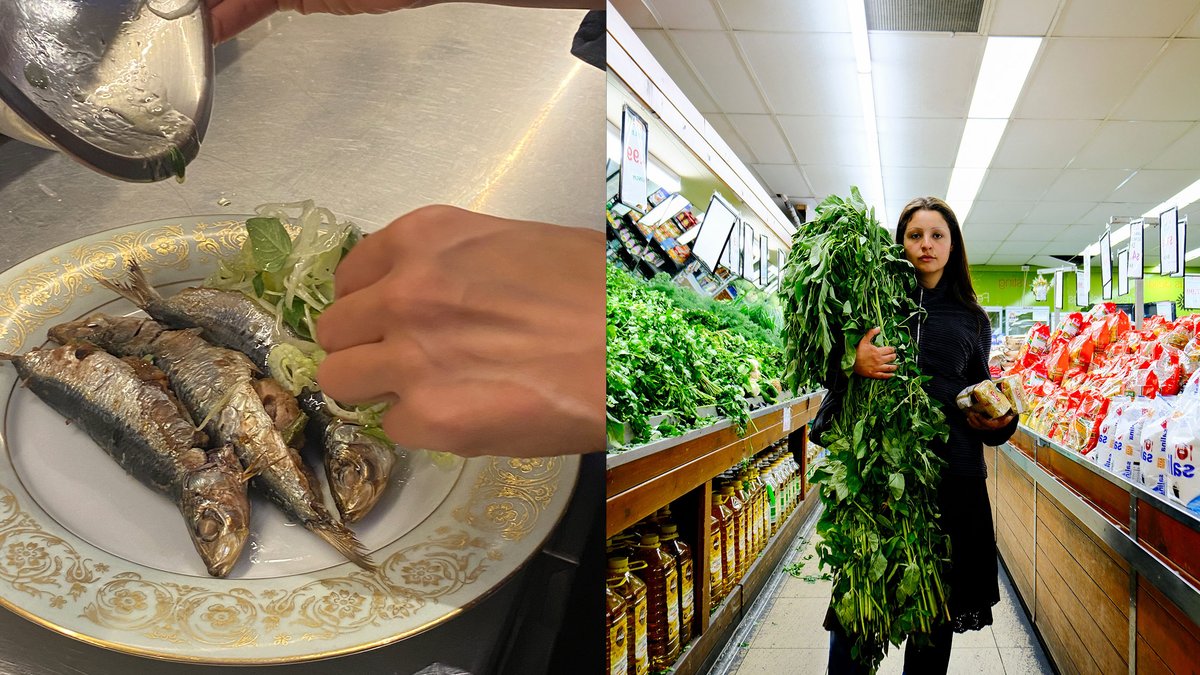
Leila Khazma, a chef based in the Blue Mountains, draws on her Egyptian and Lebanese heritage to create thoughtful, generous cooking that feels grounded, nourishing, and unfussy. Her food is shaped by the flavors of the Mediterranean and North Africa, as well as the seasons and the people around her. Khazma has spent years cooking across Sydney, leading kitchens at several restaurants and collaborating with other chefs.
Khazma’s cooking style is influenced by her desire to stay close to her culture while living far from home. She believes that cooking is a way of maintaining a relationship to places, flavors, and habits that existed before her, a kind of inheritance. Her love of food was also influenced by her mother’s friend, who is Ghanaian, and with whom she would eat Waakye, a traditional dish made with black-eyed beans and rice, after school.
Khazma’s Favorite Ingredients and Dining Experiences
Khazma’s fridge is always stocked with ingredients such as sauerkraut, thick yogurt, cod liver oil, good butter, lemons, garlic, and olives. She also usually has some kind of cured or pickled fish on hand. One of her most memorable dining experiences was eating sayadieh, a fish and rice dish, by the sea in Lebanon. The dish was deeply spiced with cumin and caramelized onions, served with tahini and sharp lemon.
Read Also: RUSSH Editors Favorite September Picks
Khazma’s dream dinner party table would include her grandmother, who she never had the chance to meet, her mother as a young woman before she migrated, a fisherman, and a butcher. They would understand the importance of patience, animals, and the sea in cooking. Her favorite vegetable is bitter greens, such as endive, chicory, and dandelion, which she finds cleansing and good for the body.
Khazma’s Recipe for Stuffed Sardines
Khazma shares her recipe for stuffed sardines, which includes 8-12 fresh sardines, cleaned and butterflied. The stuffing is made by warming oil, softening shallots, and adding garlic, sultanas, and pine nuts. Breadcrumbs are then stirred in and toasted lightly, before adding vinegar, wine, lemon zest, parsley, salt, and pepper.
To prepare the sardines, they are laid skin-side down and seasoned lightly. A spoonful of stuffing is then placed in each sardine, which is folded closed like a thin silver book. The sardines are arranged in a tray, drizzled with oil and zest, and baked at 190°C for 10 minutes. Finally, lemon is squeezed over everything.
For Khazma, cooking is not just about following a recipe, but about creating a sense of community and connection to her heritage. Her recipe for stuffed sardines is a reflection of this, as it brings together flavors and ingredients from her Egyptian and Lebanese background. By sharing this recipe, Khazma hopes to inspire others to cook with patience, good ingredients, and their hands, just as she does.
Read Also: 2026’s Must-Hear Album Releases for Your Playlist
Khazma’s Cooking Philosophy
Khazma’s cooking philosophy is centered around the idea of creating thoughtful, generous food that feels grounded and nourishing. She believes that cooking should be a way of connecting with others, and with one’s heritage, rather than just a means of sustenance. By using fresh, seasonal ingredients and traditional cooking techniques, Khazma aims to create dishes that are both delicious and meaningful.
In practice, Khazma’s cooking is often simple, yet flavorful, and made with ingredients that are readily available. Her recipe for stuffed sardines, for example, uses fresh sardines, which are abundant in the Mediterranean, and combines them with ingredients such as garlic, sultanas, and pine nuts, which are commonly used in Egyptian and Lebanese cuisine. The result is a dish that is both familiar and exotic, and that reflects Khazma’s connection to her heritage.
Khazma’s approach to cooking is also influenced by her surroundings. The Blue Mountains, where she is based, provide a unique environment that inspires her to create dishes that are connected to the land and the people around her. This connection to the land and the community is reflected in her cooking, which is deeply rooted in her heritage and her surroundings.


